House GOP may seek short-term debt limit extension
Published 3:50 pm Thursday, January 17, 2013
WILLIAMSBURG, Va. (AP) — House Republicans may seek a quick, short-term extension of the government’s debt limit, a move that would avoid an immediate default by the Treasury as the party seeks to maximize leverage in negotiations over spending cuts with President Barack Obama this spring, officials said Thursday.
“All options are on the table as far as we’re concerned,” Rep. Paul Ryan of Wisconsin said at a news conference during a three-day retreat of the rank and file. He said private discussions focused on how best to “achieve progress on controlling our deficits and controlling our debt.”
Ryan declined to say how long an extension of the government’s borrowing authority is under consideration, or what conditions might be attached. Obama has said repeatedly that he favors additional deficit savings yet he will not negotiate spending cuts as part of an agreement to raise the current $16.4 trillion debt limit. Some Republicans have suggested they may seek unspecified reforms rather than reductions, perhaps trying to force the Democratic-controlled Senate to approve a budget.
The debt limit is one of three deadlines that Congress and the administration will confront this spring. Across-the-board spending cuts begin in early March, and the government runs out of funding for many agencies and services on March 27. By contrast, there is no fixed date for raising the debt limit, since the Treasury has not yet notified Congress when it will exhaust all other measures to stay current with its bills.
Republicans gathered for their retreat at a secluded golf resort a two-hour-plus drive from the Capitol after an awkward beginning to the new Congress.
On Jan. 3, Rep. John Boehner of Ohio drew dissenting votes from nine fellow Republicans in winning a new term as speaker, while one voted present and two abstained. Two days earlier, he had infuriated Republicans as well as Democrats from New York and New Jersey by postponing a vote on emergency relief aid for victims of Superstorm Sandy.
Last Friday, the party’s rank and file overwhelmingly opposed the aid bill when it came to a vote, unhappy that it did not provide for cuts elsewhere in the budget and as a result added to deficits. The $50 billion measure cleared on the strength of Democratic support, a highly unusual event given that Republicans control the House.
At his news conference Thursday, Ryan sidestepped when asked which would inflict the most harm on the economy — implementation of across-the-board cuts, a partial government shutdown or a default.
“The worst thing for the economy is for this Congress and this administration to do nothing to get our debt and deficits under control,” said the party’s 2012 vice presidential candidate, back in Congress now as House Budget Committee chairman. “We think the worst thing for the economy is to move past these events that are occurring without any progress.”
Passage of a shorter-term increase in the debt limit would essentially shuffle the order of the looming deadlines. Rather than flirt with a first-ever default to get their way on spending cuts — a strategy unlikely to win favor on Wall Street — Republicans might threaten a partial government shutdown or allow across-the-board cuts to remain in effect.
Neither is without potential political fallout.
In particular, Republicans paid a heavy political price for a pair of government shutdowns in the 1990s. Yet the economic impact of a brief interruption in some federal services appears far less daunting than the risk of an unprecedented default that could destabilize financial markets at a time the economy is remains short of full strength after the worst recession in decades.
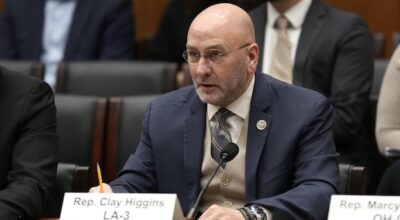
One Republican, Rep. John Fleming of Louisiana, told reporters there had been several proposals in the private discussions to advance the Republican goal of cutting spending while renewing the government’s borrowing authority.
Among them is a requirement for approval of a balanced-budget amendment to the Constitution, a condition the Democratic-controlled Senate would almost certainly reject, or perhaps a watered-down requirement for a mere vote on an amendment.
(Associated Press)